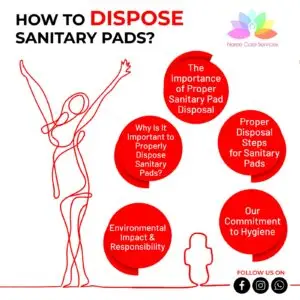
Women menstruate and during this normal bodily phase they use sanitary pads and tampons. The question of having them disposed of in an environmentally friendly manner is yet to be openly discussed amongst most of us. Why? Because despite menstruation being a normal function of a woman’s body it is ridden with shame. We never speak about it openly. This is where the challenge of managing menstrual waste of sanitary pads becomes a bit complex. Today managing menstrual waste is a mammoth task.
Why Is It Important to Properly Dispose Sanitary Pads?
There needs to be dedicated waste bin with a lid to dispose of the sanitary pad. It helps to not spread bad odors and prevents pets and pests from getting an access to pads. When the pads are flushed down the toilet it leads to plumbing issues and environmental pollution.
The Menstrual Hygiene Alliance of India (MHAI) estimates that in India there are approximately 336 million menstruating women. Out of which 36% use disposable sanitary napkins. Which adds upto 121 million women. Alarming, isn’t it?
Let’s probe further into the issue. Per menstrual cycle the number of sanitary napkins used are at 8. It implies that 12.3 billion disposable sanitary napkins need to be disposed of in India. Further the matter of concern is that majority of them are not biodegradable or compostable.
Non-biodegradable material:
The plastic and other non-biodegradable material used in the napkins lead to health and environmental hazards. The impact is even more drastic owing to the unorganized ways of waste management, disposal and poor community collection in cities and villages likewise.
The products take hundreds of years to decompose and so does the Superabsorbent polymer (SAP) present in commercial sanitary pads. They lead to clogged toilets, drains and sewage systems. If they are burnt, they release toxic fumes like furans and dioxins, harmful for the environment. In many countries people burn, bury or dispose of these products in toilets. This leads to negatively impacting the air.
People in many countries resort to burning, burying, or disposing of these products in toilets or latrines. Such disposal methods negatively impact air and soil quality and hamper sanitation systems. Thus, jeopardizing the health of both the public, waste management and sanitation workers in those communities.
Three main concerns of managing this non-compostable menstrual waste in India as per MHAI are:
-
-
- Not many options are available to appropriately dispose of and treat this unsafe management of waste.
-
- Most girls and women don’t get access to waste management options existing due to limited capacity to negotiate for these solutions. This is because of the silence we maintain in our culture about menstruation.
-
- As there are not many options to dispose of the sanitary napkins, girls and women might use the otherwise hygienic products in unhygienic manner. Which means they might use the pad for a longer period of time.
Waste disposal, management of menstrual and other sanitary waste requires organized segregation, collection and transportation. But there are no viable processes or models for this purpose that have been formed or implemented till now.
Proper Disposal Steps for Sanitary Pads:
When menstrual pads are disposed of, they need to be wrapped in a plastic wrapper or toilet paper. Then you need to place it in a designated waste bin, which is meant for that purpose preferably one with a lid.
Don’t flush the pad down the toilet as it leads to clogged drains.
Let’s break down the process properly:
-
- Fold the pad and roll it in a compact manner.
-
- Enclose the rolled pad in a wrapper of the new pad. Wrap this in a toilet paper or newspaper.
-
- Use a resealable plastic bag or a separate sanitary pad disposal bag so that the odour doesn’t spread and there is no leakage.
-
- Dispose it in a dedicated bin if available or a regular bin which has a lid.
-
- Do not flush the menstrual pad in the toilet as it will block the sewage system and lead to environmental problem.
-
- If possible, use biodegradable or compostable pads to minimize the harm on environment.
-
- When you dispose of the used pad use biodegradable bags.
Our Commitment to Hygiene and Environmental Responsibility
Our focus at Naree Care is to provide safe, eco-friendly and convenient choices for Menstrual Hygiene Waste Management. This ensures a healthier environment through state-of-the-art sanitary pad dispenser and collection units meant to be used at public restrooms, schools, offices and communal places.
The units are discreet and user-friendly so they are convenient way for women to dispose of their sanitary pads hygienically. Each dispenser and collection unit are designed with functionality and aesthetics in mind. They get integrated into any environment as they promote cleanliness and hygiene.
Apart from providing the dispenser and collection units we offer educational resources and support to help organizations execute a properly processed menstrual hygiene management.
Thus, if you are looking for a systematic and environmentally friendly way to dispose of menstrual waste and wish to know more about it, connect with our Naree Care team. We are here to help you!!
Read more similar article:
Home Remedies for Menstrual Cramp