Monsoon bring respite from scorching heat but it also bring hygiene challenges especially for washrooms. The weather is moist and it brings dampness that breeds microscopic organisms and fungus. They are the root cause of persistent unpleasant odours that become unbearable at times. The facilities staff of your company ensures to keep the bathrooms odour free by safeguarding the hygiene of washrooms. Thus, the overall perception about the company and the brand elevates. Any guest walking into the washroom feels pleasant and it impressed about the efforts taken to keep the office environment clean. But are the hygiene challenges during rainy season?
Effective ways to keep washrooms clean and fresh:
Monsoon Washroom Hygiene Challenges due to moisture in rainy season:
Challenged by Humidity:
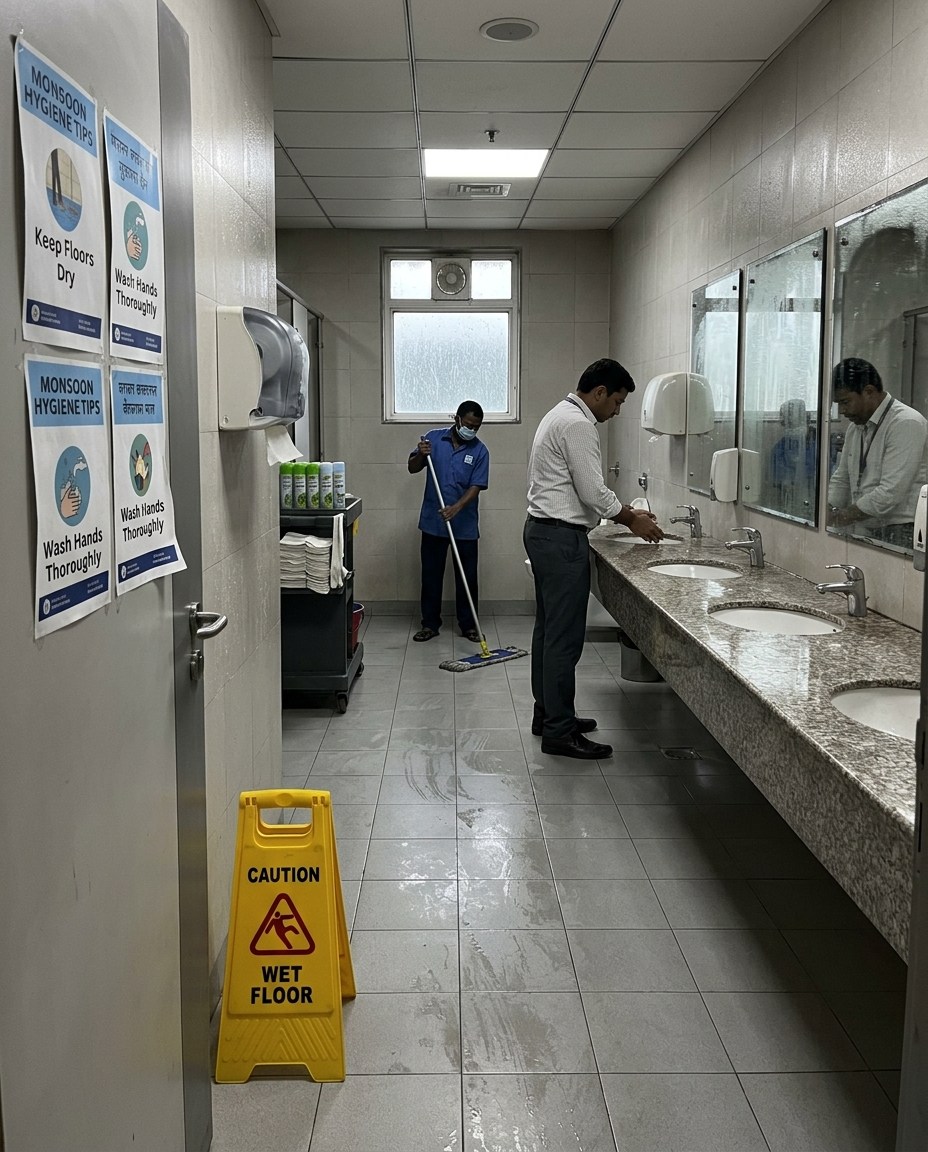
The air becomes polluted due to moisture. Due to air saturation surfaces don’t remain dry leading to microbial growth. They then become breeding ground for other organisms though they aren’t recognizable immediately. Even in areas that look clean there are minute microbial growth due to dampness. Just surface cleaning won’t help, one should tackle humidity and indoor air quality. Mild musty unpleasant odour might get ignored. But it is a serious environmental problem that needs immediate solution.
The routine cleaning is imperative. Humidity management, indoor air quality and special solutions to target root cause is vital.
Monsoon Washroom Hygiene Challenged Drainage system:
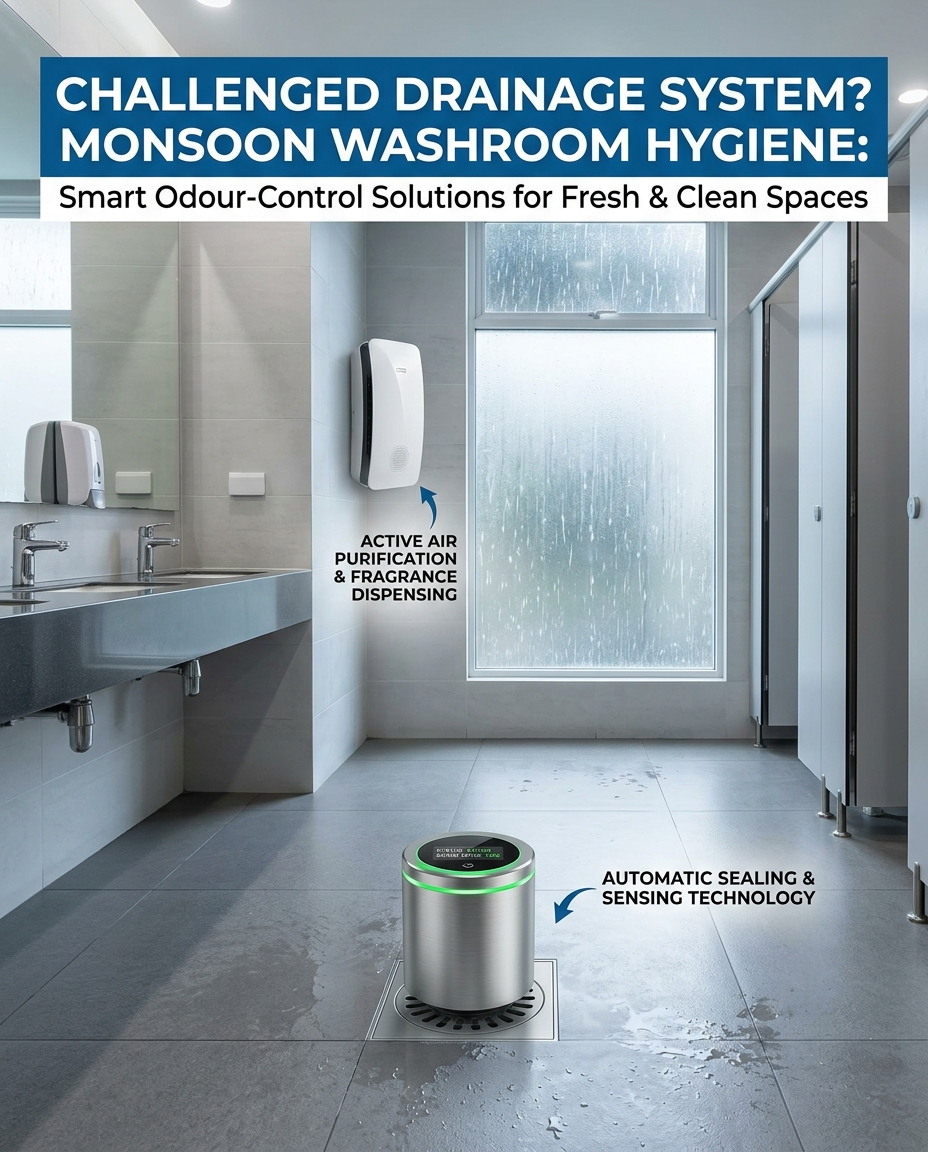
Accumulation of bacteria in tiles and internal drainage system cannot be overlooked. Bacteria lives on uric acid and organic waste thus, leading to strong unpleasant odour. Uric acid can harm grout then allowing mold and bacteria to enter deeper and make the odour even more unbearable.
Regular cleaning cannot solve this challenge.
Ventilation challenges:
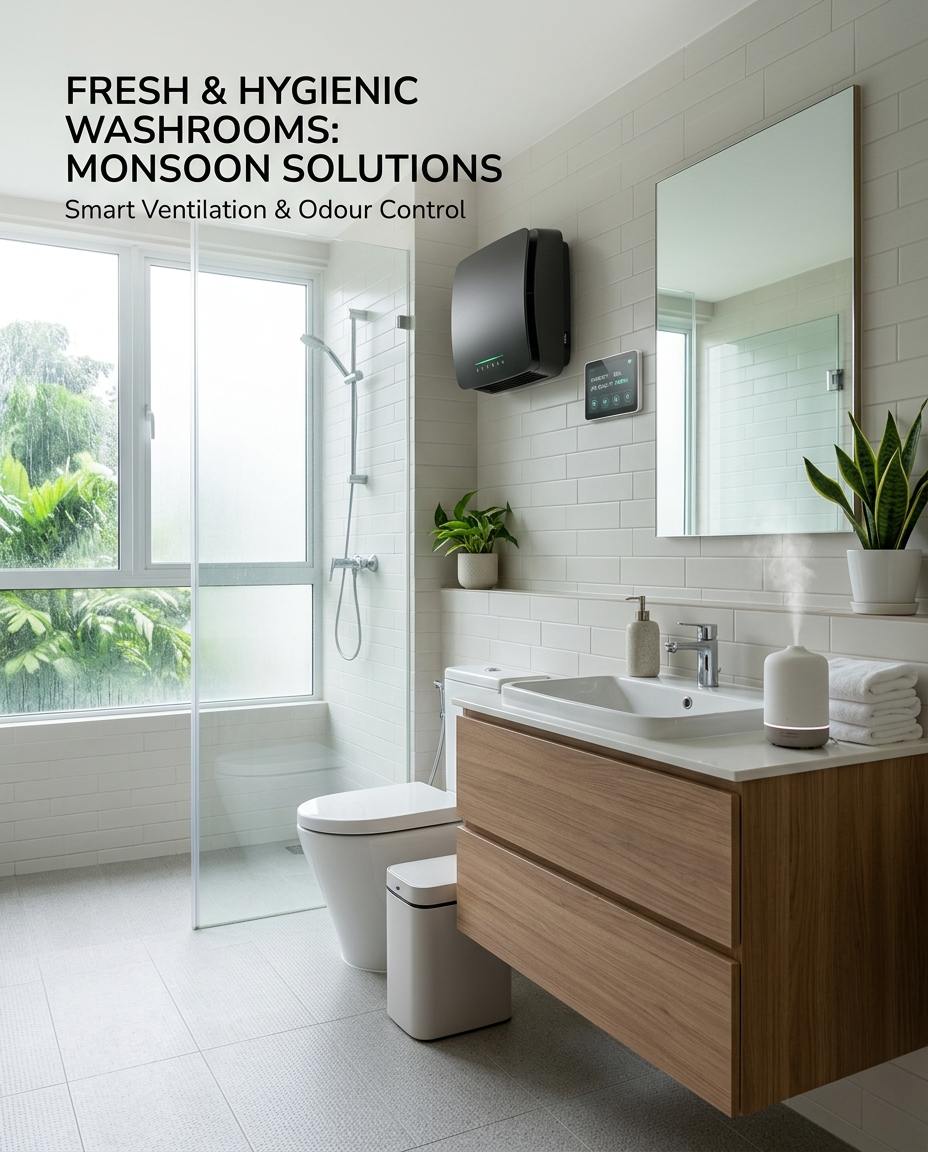
Inadequate ventilation impacts air quality. Energy efficient and airtight structural designs help to keep the temperatures down. But the biggest challenge here is they attract substances that cause odour. The condition of washroom areas that are confined are even more challenging.
Sufficient airflow is necessary otherwise humidity increases. Volatile organic compounds stay for a longer time resulting in an extremely unpleasant environment.
In an office it leaves a bad impression and discomforts users. Such spaces require high maintenance cost too.
Regular cleaning doesn’t do away with hidden bacteria and other infectants that keep lingering in washrooms in humid environments. For long lasting dryness and freshness, effective hygiene solutions like cleaners, disinfection methods and odour neutralizing agents are vital.
Solutions for keeping the washrooms clean and fresh:
- Urinal Screens are placed directly over urinal drains and are effective devices. Their main function is to prevent clogs by restricting debris. They reduce urine splashback, keeping the floor clean.
- Aerosol air fresheners are convenient as they are portable and don’t need electricity or battery.
- Liquid deodorants and gel packs are also helpful to keep the air fresh.
- Wipe the damp surfaces frequently.
- Use mats that absorb moisture at the entrance.
- Arrange for dehumidifiers in places that are moisture filled.
- Areas that are wet need immediate and persistent maintenance.
- Keep areas ventilated and add an exhaust fan.
- Install seat sanitizers.
- Arrange for periodic deep cleaning for carpets and curtains.
- Keep the walls and floors clean with antimicrobial solutions.
- Lift the carpets and mats weekly and dry them in the sunlight.
- Antibacterial sprays can be used on fabrics.
- Dry spots filled with moisture to prevent mildew.
- Use closed sanitary bins to avoid bad odour.
Naree Care https://nareecare.com/ offers designated bins that prevent foul odour and are specially meant for disposing off menstrual products. They ensure proper hygiene, keep spaces clean, and don’t harm the environment.
Get in touch with our team if you believe in sustainable living.